

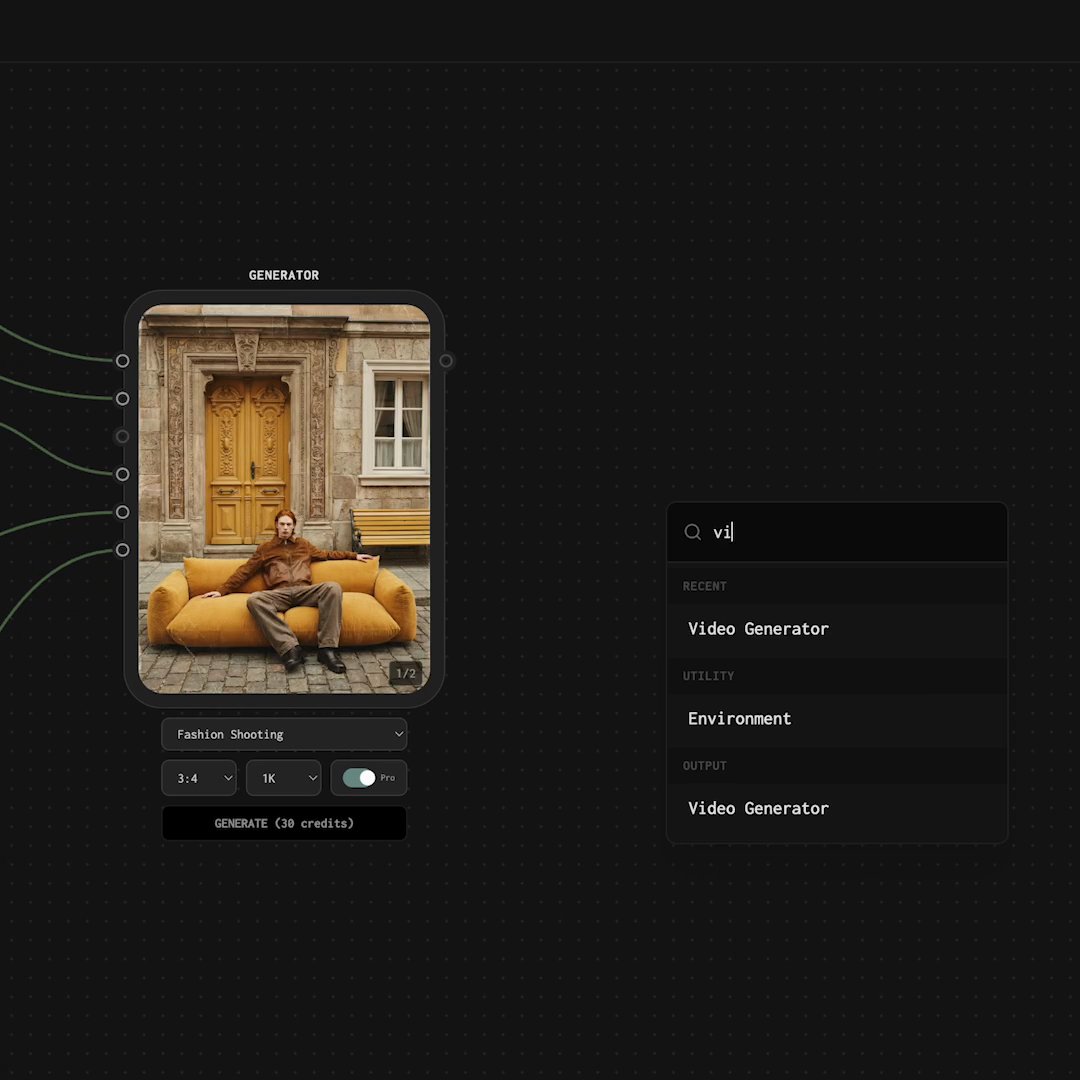
How video generation works
Video uses a dedicated Video Generator node — it is not a mode on the Image Generator. Select a model on the node. The input handles update to match that model. Connect images, frames, text, or video references as shown, then click Generate. Credit cost and duration options appear on the node before you run. Video generation is available on paid plans and typically costs more credits than a still.Video models
Use Image nodes, Video nodes, Full Body outputs, or Image Generator results as sources for those handles when the connection types match.
Adding a Video Generator
1
Open your project
Work in a project that already has strong still assets, or start fresh.
2
Add the Video Generator
From the floating dock, add a Video Generator node.
3
Choose a model
Pick Kling 2.6, Kling 3.0, or Seedance 2.0. Confirm the input handles that appear.
4
Connect inputs
Wire the frames, references, text, or media the model asks for. Keep subject and style consistent with your still campaign when you want matching motion.
5
Generate
Check duration and credit cost on the node, then click Generate. Keep working on the canvas while the job runs in the background.
Use cases
- Reels, TikTok, and Stories — short motion that matches your brand look
- Product teasers — a still hero frame animated into a short clip
- Lookbook motion — subtle movement on editorial fashion frames
- Paid social — variants for ads without rebuilding the whole campaign
Tips for better video output
- Start from a still you already like, then animate that frame
- Prefer environments with clear spatial structure (studio, room, defined outdoor) over highly abstract scenes
- Use a character pose that reads clearly as a starting frame
- Keep product and character references consistent with your image workflow